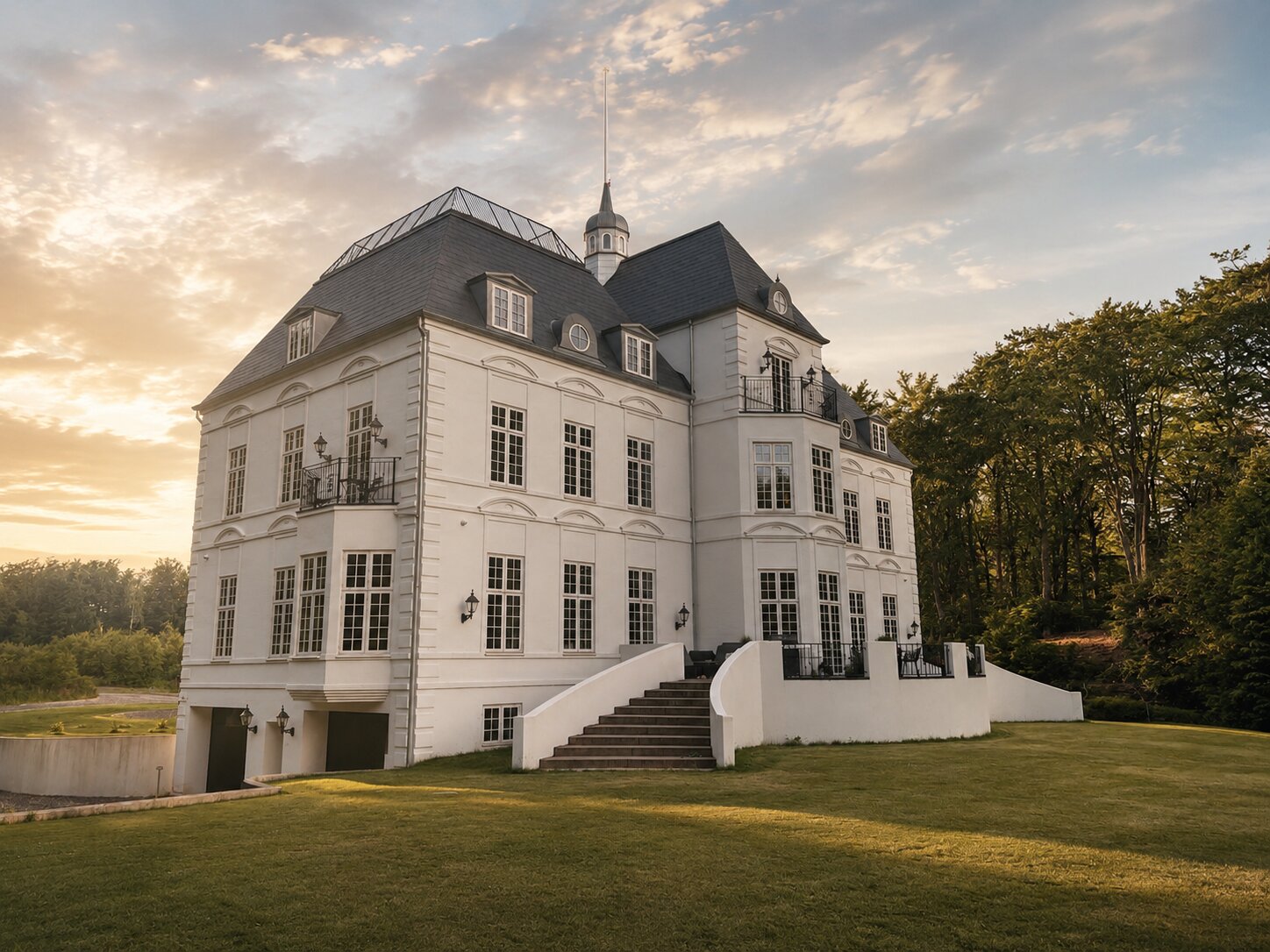
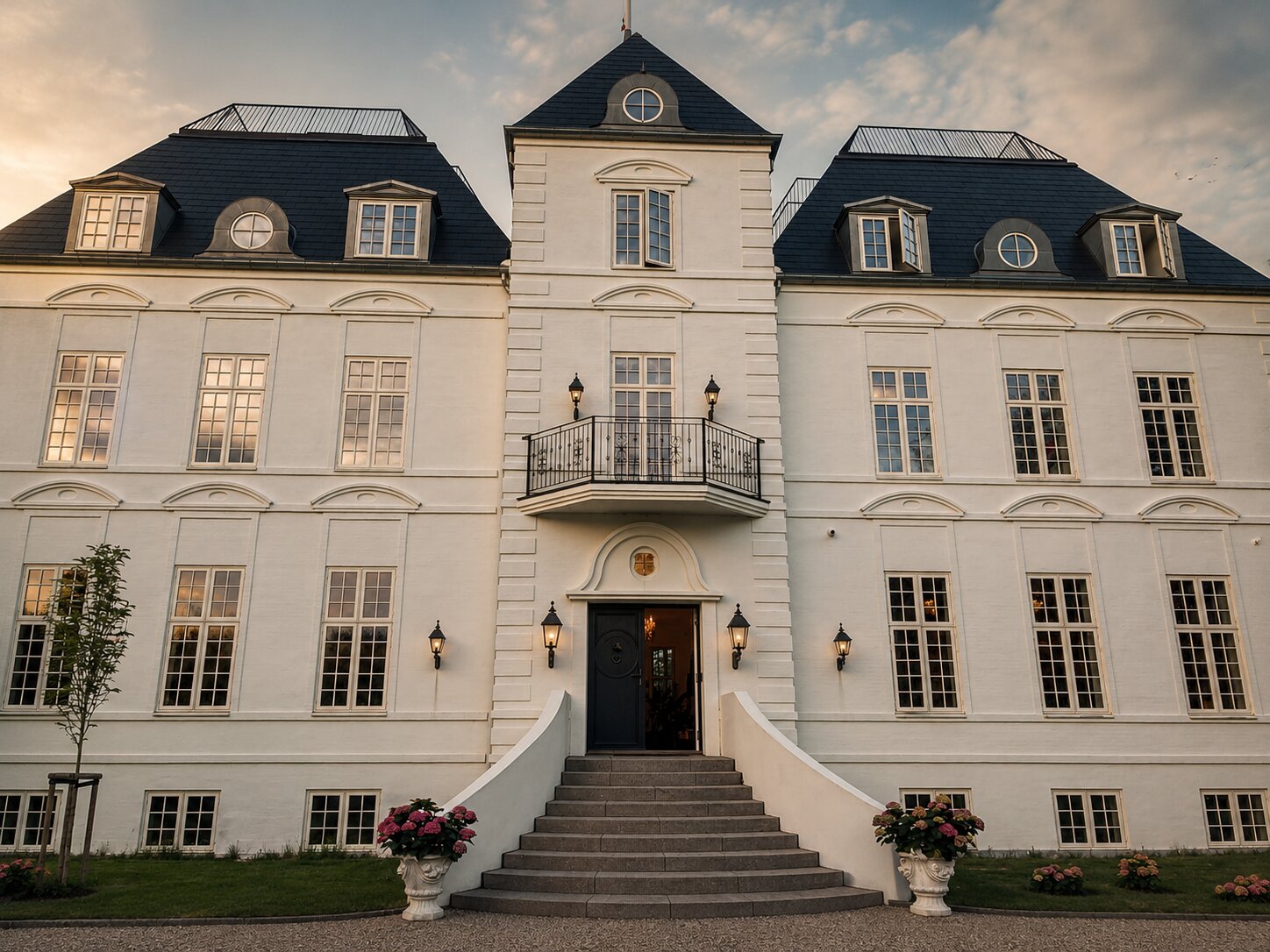
The castle exterior, façadeimages/slot-facade.jpgThe castle exterior, façade
Architecture & inspiration

The castle

Møllenborg Castle is a recent building in a historic architectural language. Its architecture draws inspiration from European castles, Château de Cheverny and Hergé's Marlinspike Hall, yet it was built as a contemporary Danish home in its own landscape.


A new castle in a historic architectural language

Work on Møllenborg began in 2016. Construction started in mid-2020, and the house came into use in late 2021. The castle is therefore new, but stands on a site with far older traces in the soil and landscape.

The house should be understood as a personal interpretation of castle architecture rather than a reconstruction. It borrows form, symmetry and atmosphere from historic models, but was built to function as a private home.

Models and narrative

Marlinspike Hall, Cheverny and Møllenborg

One clear source of inspiration is Marlinspike Hall, Captain Haddock's castle in Hergé's Tintin universe. Hergé based Marlinspike Hall on Château de Cheverny in the Loire Valley. Møllenborg thus forms part of a chain of inspiration: from French castle architecture to the comic-book Marlinspike Hall and onward to a Danish house in an East Jutland landscape.

The connection should not be understood as a copy. Møllenborg is neither Cheverny nor Marlinspike Hall, but an independent house in which the inspiration has been translated into Danish materials, Danish light and a specific estate with forest, fields and older historic traces.

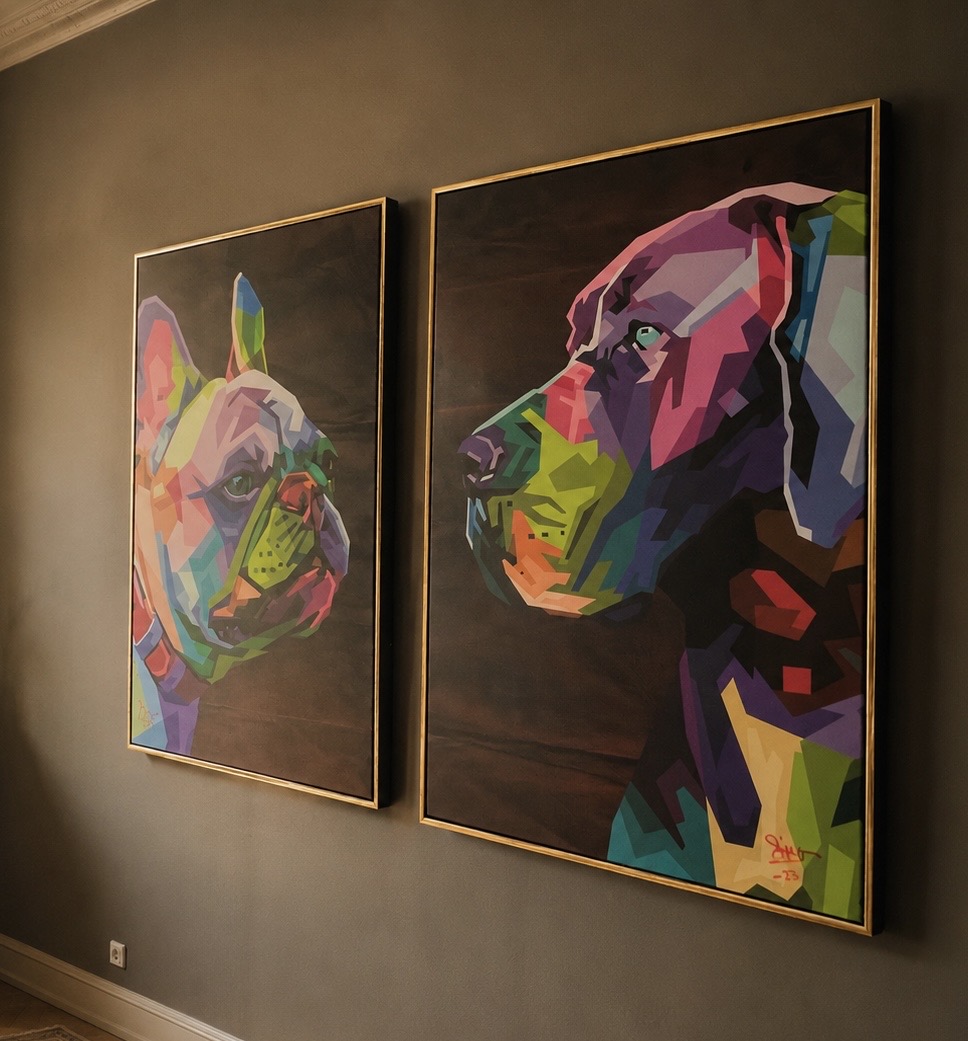
01

Château de Cheverny

The French castle in the Loire Valley that served as Hergé's architectural model.

02

Hergé's Marlinspike Hall

Captain Haddock's castle in the Tintin universe, drawn with Cheverny as its model.

03

The Danish Møllenborg

The inspiration translated into a Danish landscape and a private home.

04

Møllenborg Slot

The completed building as it stands today.

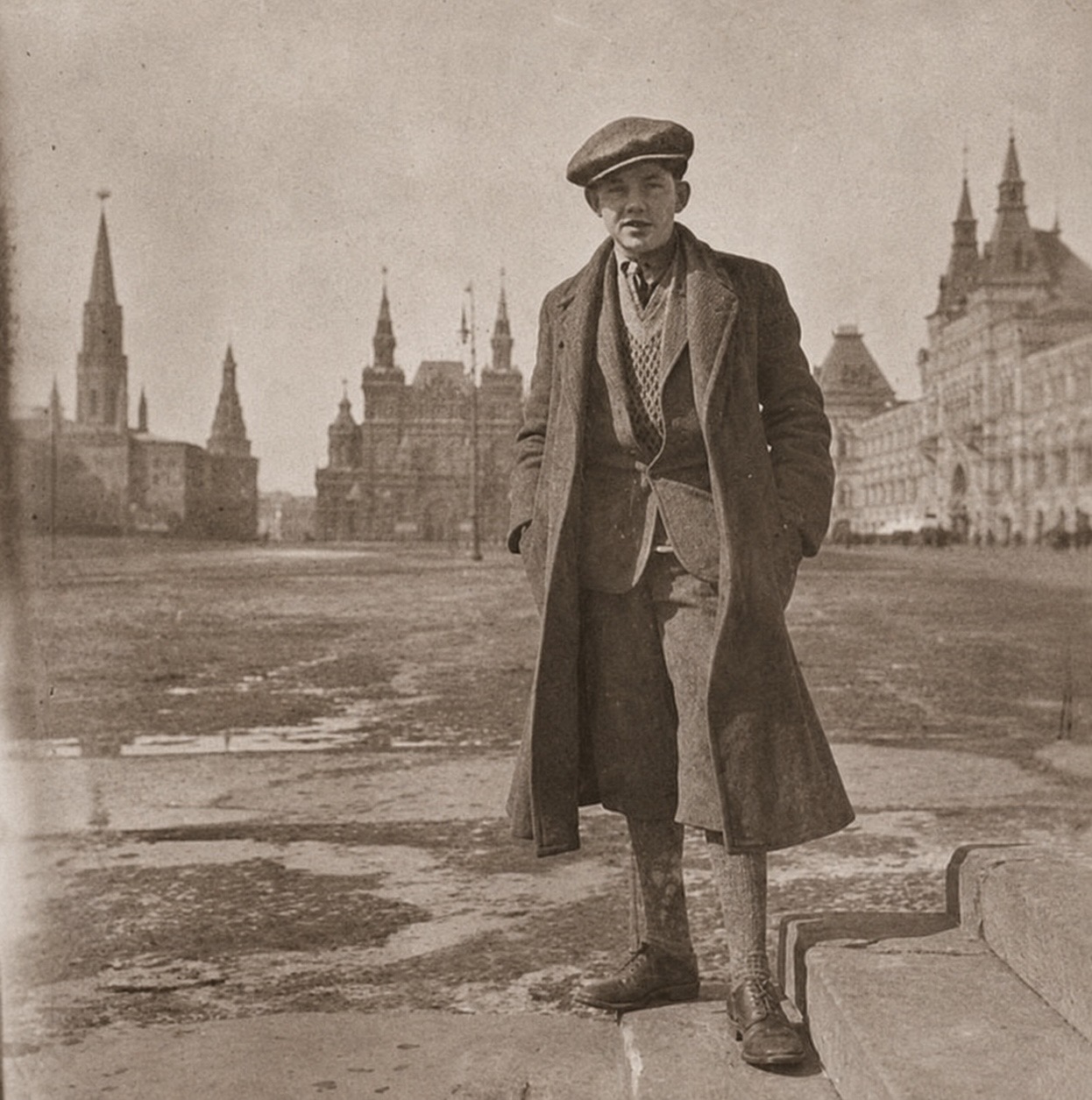
Palle Huld, portraitimages/palle-huld.jpgPalle Huld, portrait

Palle Huld and the Tintin connection

The Danish Boy Scout Palle Huld travelled around the world at the age of fifteen in 1928 and became known in Denmark and abroad. His story has often been mentioned in connection with the cultural background of the Tintin character.

The connection between Palle Huld and Tintin is treated with caution. It is relevant here because Møllenborg's architectural inspiration passes through Hergé's universe, but it should be understood as a possible cultural-historical connection rather than a documented origin.

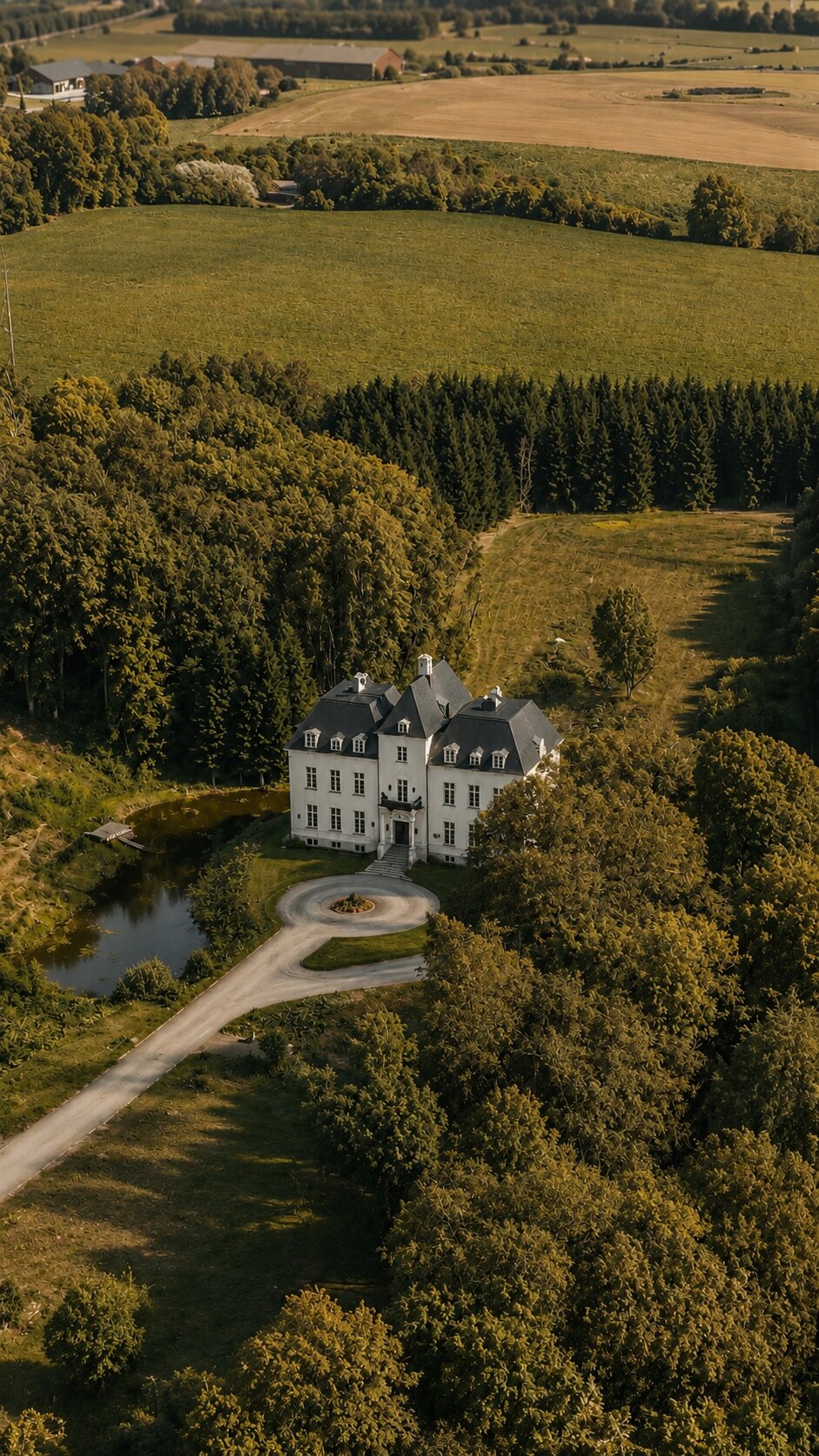
The castle in the landscapeimages/slot-landskab.jpgThe castle in the landscape

The house in the landscape

Møllenborg is placed at the transition between forest, field and garden. The house lies in a landscape that already had lines, access roads, planting and historic traces before construction began.

This means the castle is not only a building, but also a way of organising the site. Axes, views, access roads, woodland edges and open areas are part of the whole. The house draws on a tradition of castle architecture in which building and landscape are considered together.

Architecture and details

Materials and details

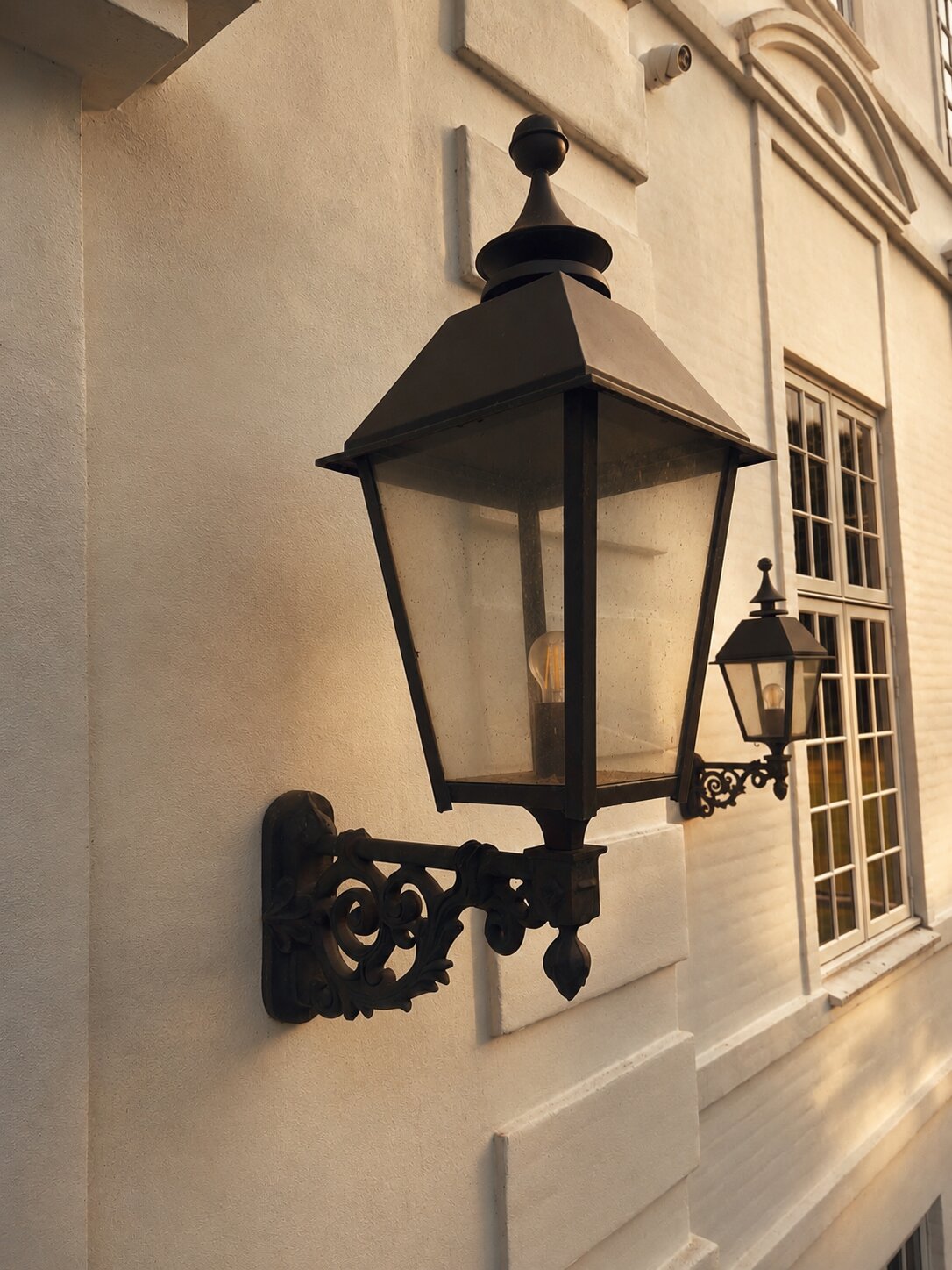
Møllenborg was built with historic references, but as a contemporary house. This applies to its proportions, materials and details. Façades, roof form, towers, axes and symmetry draw on classic castle motifs, while its interior and use belong to a modern private home.

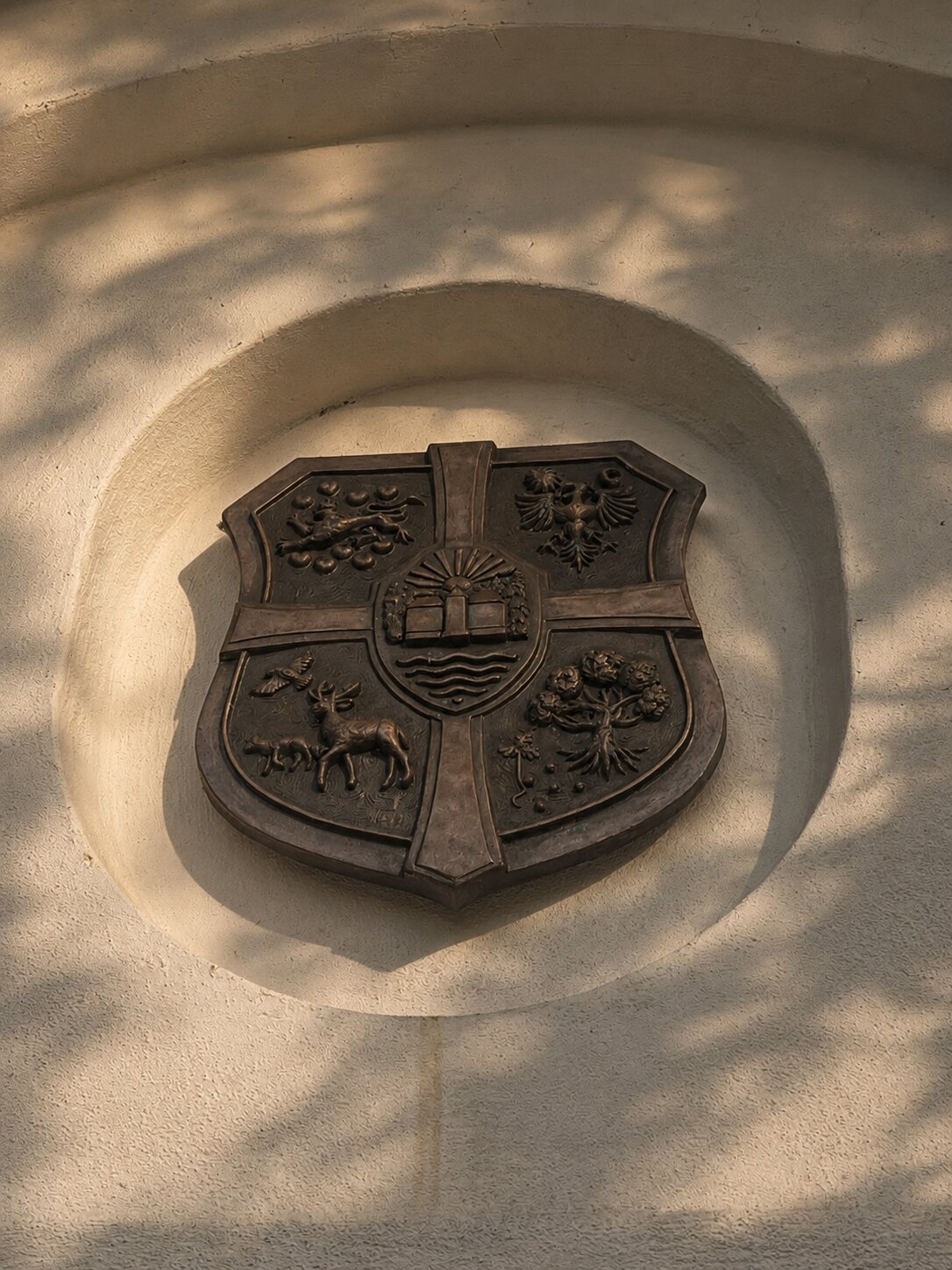
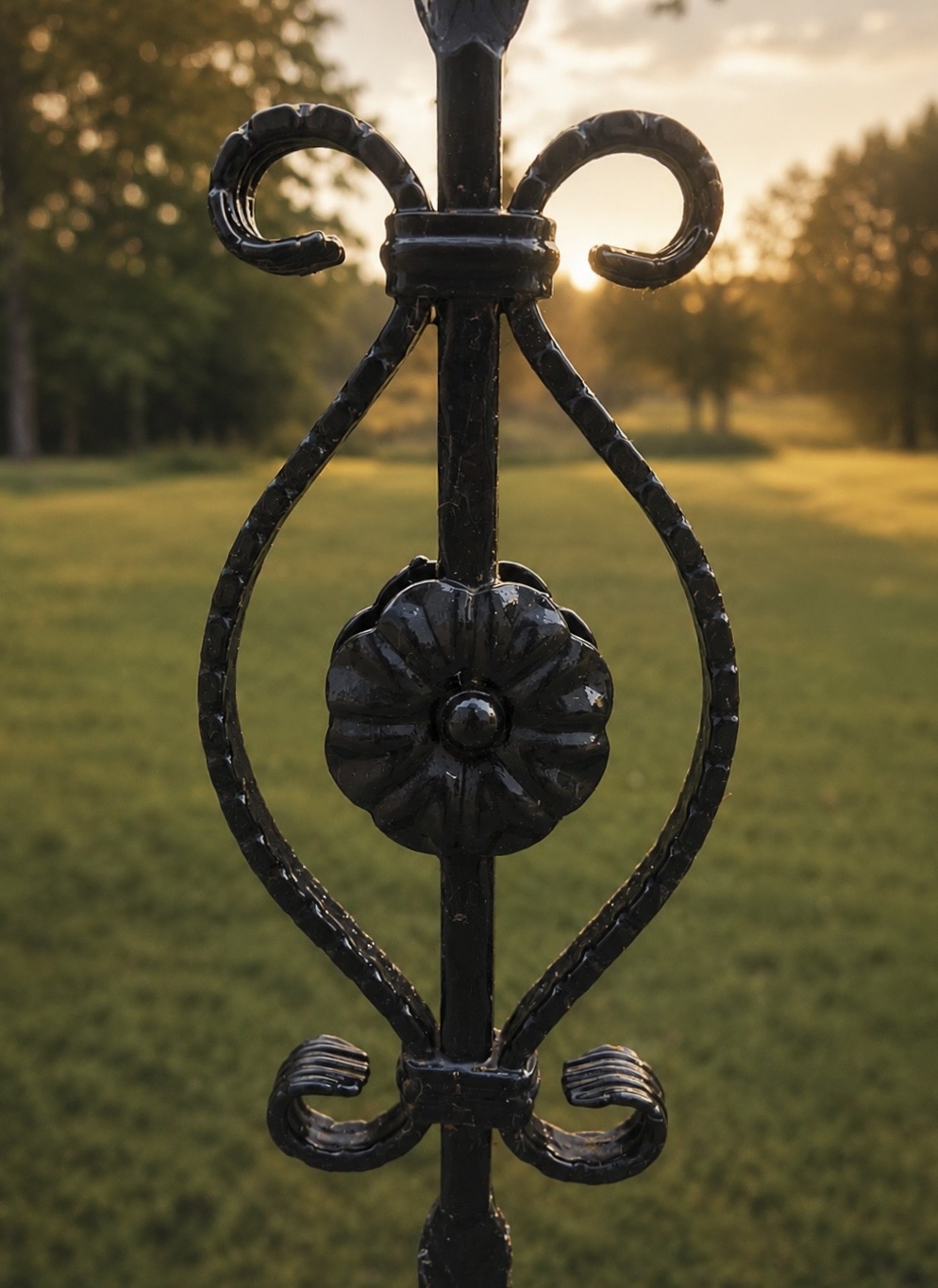
The details were chosen to connect the house to the site. This includes bronze and brass work incorporating motifs from the garden and landscape directly into the house.

The details

Bo Mathorne and Vanda Zwick

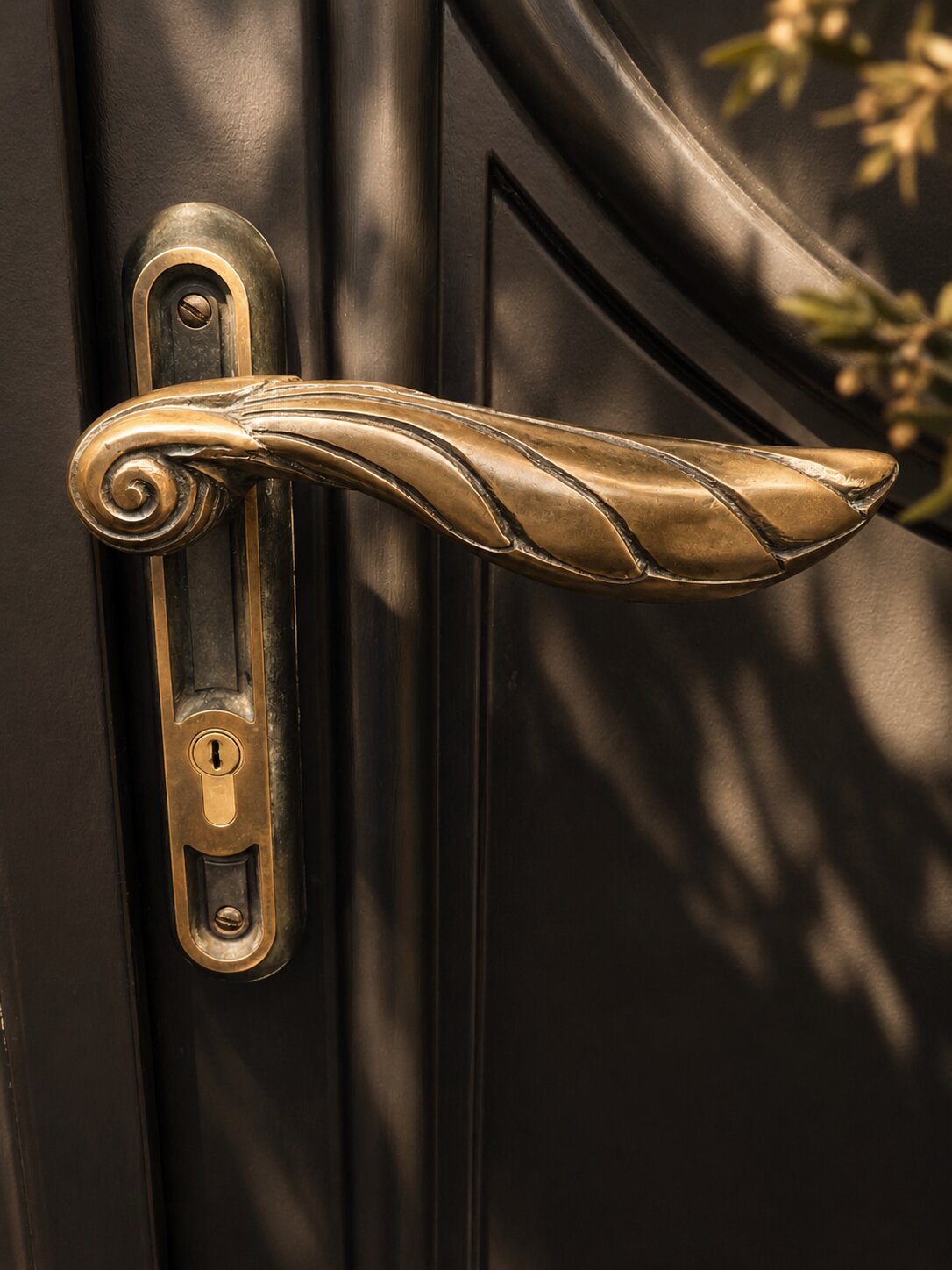
Brass handleimages/detalje-messinggreb.jpgBrass handle

Several of the house's bronze and brass works were created by Bo Mathorne and Vanda Zwick. Mathorne works with sculpture and visual design, while Zwick's artistic practice encompasses sculpture and ceramics. At Møllenborg, their work is connected to the house through motifs from the site.

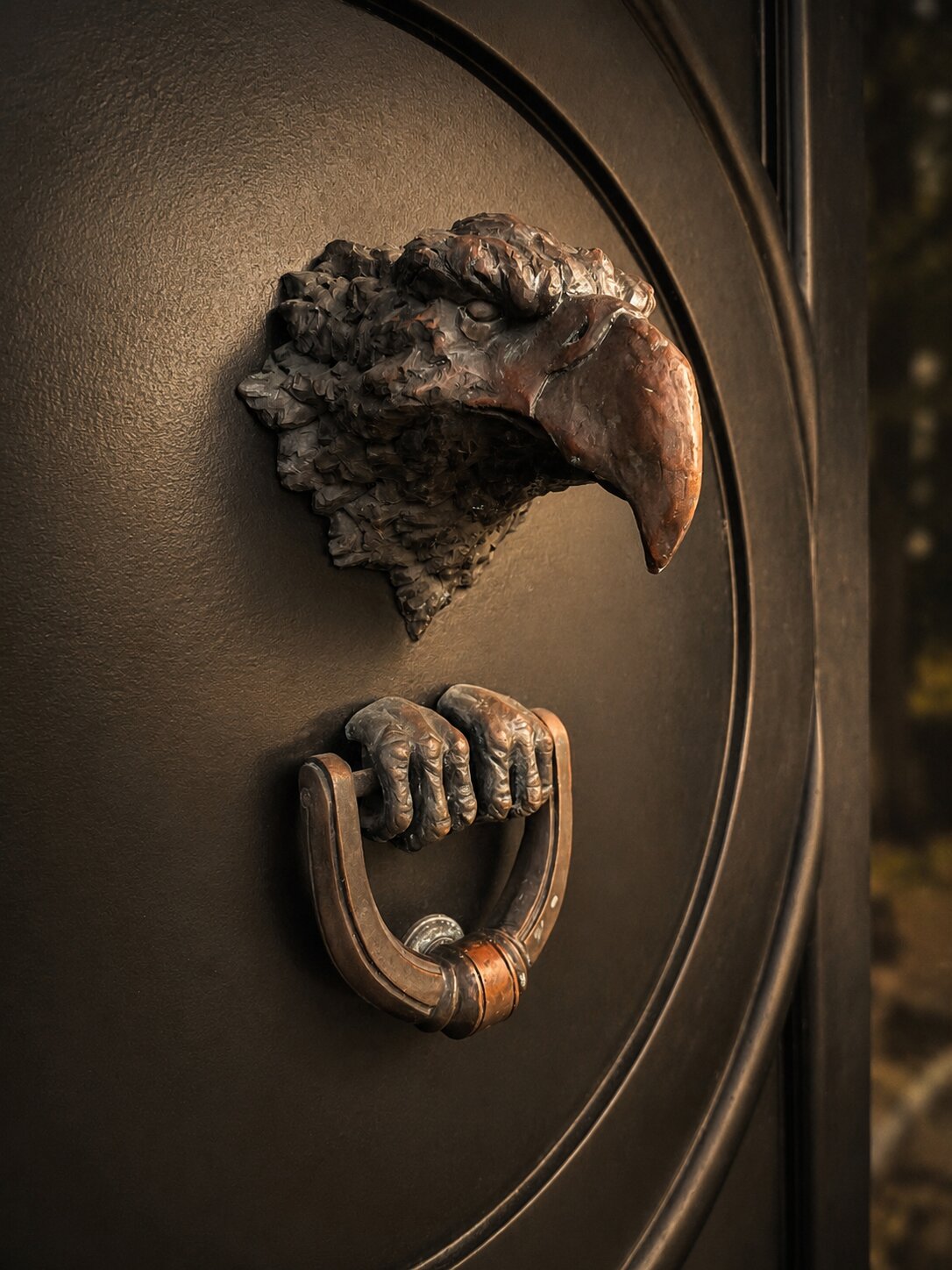
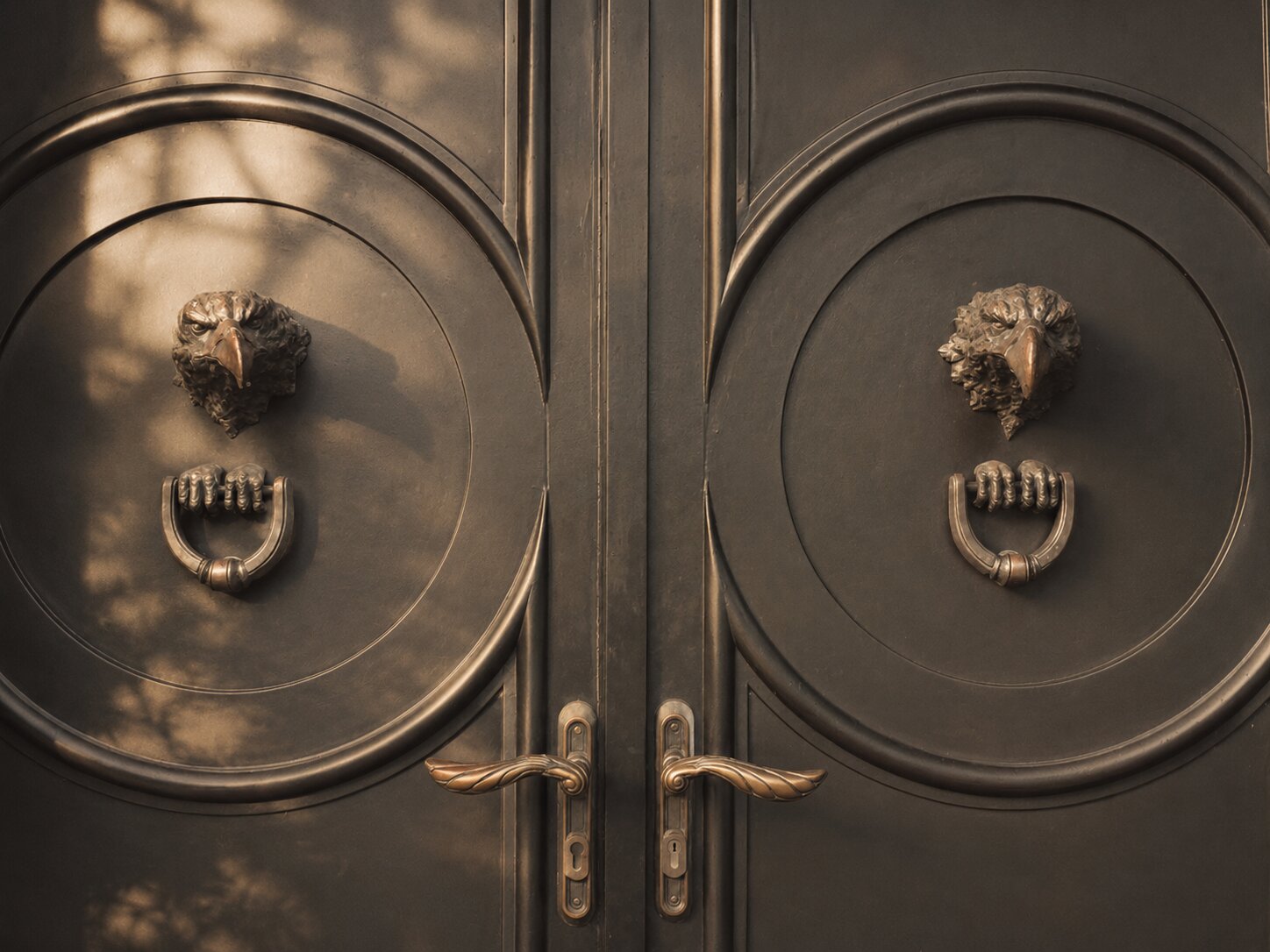
The interior brass handles take their form from the old oak tree in the garden. Oak leaves have been translated into handles that connect the rooms with the landscape outside. On the main door and in selected details, the eagle motif recurs, inspired by the white-tailed eagles regularly seen above the area.

Brass and bronze are used here as materials that carry motifs from the site into the building. They are discreet details, but give the house a tangible connection between nature, craftsmanship and architecture.
Brass handles

Brass handles featuring oak leaves from the garden's old oak tree.


Bronze eagles

Bronze work inspired by the white-tailed eagles above the estate.

A private home

Møllenborg is a private home with a cultural history to tell. The castle is new, but was built with deliberate references to older architecture, European visual culture, the Danish landscape and details belonging to the site itself.

It is this combination that gives the house its character: not age in itself, but the connection between a new building, an ancient landscape and the materials, motifs and objects chosen for the site.